We are back in business! Cinemas have finally reopened and we are here to celebrate. 4 proclaimed cinephiles and yet only one of us has enjoyed the grand reopening. We have our first casualty already caught up in the summer blockbuster heatwave. Join us as we revel in all the glories cinemas have to offer now they are finally open again! Tell us what has made cinemas reopening so special to you – celebratingcinema@lab111.nl
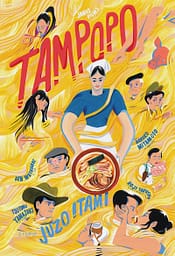
We will discuss everything food has to offer in cinema. What does food and the act of eating reveal about cinematic characters? Why are we often so mesmerised by those eating on screen, desiring the very food that they are consuming? Join us for a very tasteful discussion. WARNING – Do Not Listen While Hungry!
Film Club
(Come watch with us at LAB111 – book your tickets)
The sophomore directorial effort from ill-fated Japanese filmmaker Juzo Itami, Tampopo is an off-beat comedy featuring several intersecting stories all related to food. Tsutomu Yamazaki plays Goro, a truck driver who helps a young widow named Tampopo (Nobuko Miyamoto) improve her noodle restaurant. Over the course of the film, the story drifts around, not only following the stories of Tampopo, her son, and Goro, but also a number of customers who come through the diner, including an old woman (Izumi Hara) who insists on squeezing the cheese at a market and a criminal (Ken Watanabe) with a food-based kink. Tampopo was nominated for Best Foreign Film at the 1988 Independent Spirit Awards.
Films mentioned
(click on the links for tickets to screenings at LAB111)
from left to right: Tom Ooms (film programmer), Hugo Emmerzael (film critic) Kiriko Mechanicus (film maker), Elliot Bloom (podcast producer)
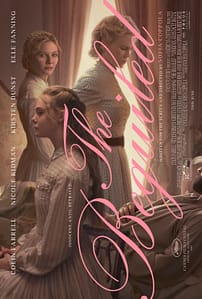
Eroticism should be found in balance! Now isn’t it about time that women in cinema got to look back, shifting the gaze back on to the male, or at least express what it is like to be looked at through the male gaze that has dominated cinema. Basje Boer, film critic and author, joins us in celebrating female desire in cinema and exploring the complex gender dynamics within cinema and the effect it has on us as an audience. Our film club choice The Beguiled (Sofia Coppola, 2017) kickstarts our discussion, a hot take on what happens when you equalise desire. As always, if you have any questions you would like us to discuss or stories about cinema you would like to share then please email us at celebratingcinema@lab111.nl
Basje Boer (1980, Amsterdam) is an author and film critic. She has published various novels, including Nulversie (2019, Nijgh & Van Ditmar) and Bermuda (2016, Nijgh & Van Ditmar), and writes about film, pop culture, art and literature for Dutch magazines De Groene Amsterdammer and De Filmkrant, among others.
She has written at length about topics like the female (and male) gaze, female representation in film and her novels are riddled with references to films and plays on the cliches of cinema.
Next episode
We will discuss everything food has to offer in cinema. What does food and the act of eating reveal about cinematic characters? Why are we often so mesmerised by those eating on screen, desiring the very food that they are consuming? Join us for a very tasteful discussion. WARNING – Do Not Listen While Hungry!
Film Club
(Come watch with us at LAB111 – book your tickets)
The sophomore directorial effort from ill-fated Japanese filmmaker Juzo Itami, Tampopo is an off-beat comedy featuring several intersecting stories all related to food. Tsutomu Yamazaki plays Goro, a truck driver who helps a young widow named Tampopo (Nobuko Miyamoto) improve her noodle restaurant. Over the course of the film, the story drifts around, not only following the stories of Tampopo, her son, and Goro, but also a number of customers who come through the diner, including an old woman (Izumi Hara) who insists on squeezing the cheese at a market and a criminal (Ken Watanabe) with a food-based kink. Tampopo was nominated for Best Foreign Film at the 1988 Independent Spirit Awards.
Films mentioned
(click on the links for tickets to screenings at LAB111)
from left to right: Tom Ooms (film programmer), Hugo Emmerzael (film critic) Kiriko Mechanicus (film maker), Elliot Bloom (podcast producer)
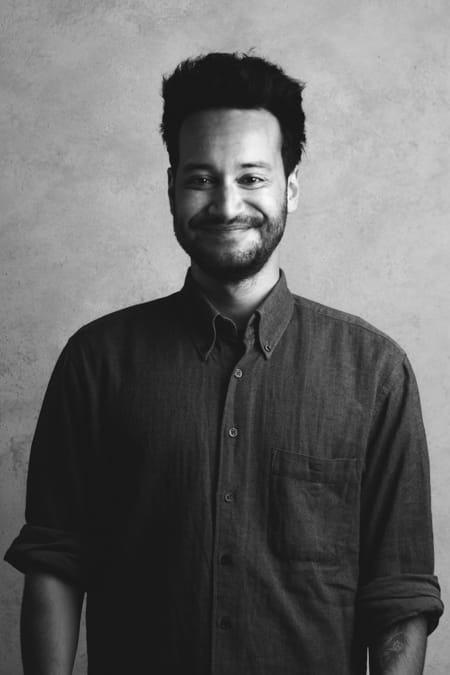
Western cinema has mostly defined our movie crushes to be predominantly white, often leaving non-white characters to be reduced to caricatures, particularly East-Asian characters. To celebrate the 4K restoration release of some Wong Kar-Wai classics, we are joined by author, filmmaker and activist Pete Wu to dissect the representation of East-Asian characters in Western cinema and how WKW directly opposes such limited portrayals. We even have an exclusive from Wong Kar-Wai himself who adds his own voice to this insightful discussion. As always, if you have any questions you would like us to discuss or stories about cinema you would like to share then please email us at celebratingcinema@lab111.nl.
Journalist and writer Pete Wu wrote his acclaimed debut The Banana Generation (Das Mag) in 2019, which was nominated for the Brusseprijs 2020 for Best Journalism Book.
In June 2020 he made the VPRO docu-series Pete And The Banana’s, which explored dating and relationships among East Asians Dutch youngsters.
Next episode
Joined by author and film critic Basje Boer, we will discuss female desire and the notion of “sexy” in cinema. We explore how cinema has warped our perception of both these concepts but more importantly we unpack some great films that are positively reaffirming female desire.
Film Club
In Civil War drama The Beguiled, a deserter from the Union Army (Colin Farrell) seeks refuge at an all-female boarding school in Virginia, where the ladies compete for his affections while tending to his injuries. His presence at the school slowly poisons the relationships between the various women, who eventually turn on the soldier. Nicole Kidman, Elle Fanning, Kirsten Dunst, Oona Laurence, and Angourie Rice co-star. Sofia Coppola wrote and directed The Beguiled, which is based on a novel by Thomas Cullinan that was previously adapted into a 1971 film of the same name (with Clint Eastwood in the role played here by Farrell).
Films mentioned
(click on the links for tickets to screenings at LAB111)
Shang-Chi And The Legend Of The Ten Rings (Destin Daniel Cretton, 2021)
Our hosts
from left to right: Tom Ooms (film programmer), Hugo Emmerzael (film critic) Kiriko Mechanicus (film maker), Elliot Bloom (podcast producer)
The month of May is always a period of remembrance, commemorating all those who lost their lives during the Second World War both as victims of genocide and those fighting for their freedom. With screenwriter, director, and fellow list-lover Kim Kokosky Deforchaux, we take a look at how different countries through cinema and film deal with trauma and this particular period of history. As always, if you have any questions you’d like us to discuss or stories about cinema you would like to share then email us at celebratingcinema@lab111.nl.
Kim Kokosky Deforchaux (1988) is a Dutch director and screenwriter based in Amsterdam.
For his graduation from the Netherlands Film Academy in 2017 he wrote a dissertation on how World War II has been portrayed in film by various countries all around the world. This dissertation was mostly inspired by the research for his own feature length screenplay about the war.
He has since written and directed the short film Ik, Moordenaar and is currently finishing his next short film, Hantu. He also wrote the short film Colosseum and co-wrote feature film Femi, which will be released later this year.
Next episode
Joined by writer, documentary maker and journalist Pete Wu, we discuss representation of South-East Asian men in the films of Wong Kar Wai, ahead of his re-mastered retrospective, as well as other national cinemas around the world, and their portrayal of these male characters.
Film Club
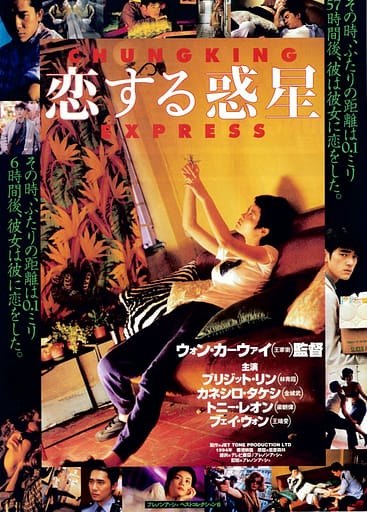
A Hong Kong fast food restaurant acts as the link between two unusual stories of police officers in love in this eccentric, stylish comedy-drama. Director Wong Kar-Wai plays freely with traditional narrative structure, dividing his film into two loosely connected segments. The first centers on a depressed cop struggling to come to terms with a recent break-up. His sad isolation is transformed when he encounters a beautiful, mysterious femme fatale, whose involvement with the criminal underworld proves troublesome for both. The second story explores the odd relationship between a female restaurant worker and another recently jilted police officer. The strange woman decides to regularly clean and redecorate the man’s apartment in his absence, allowing the two to form a close intimacy without meeting face to face. Both stories present a beautifully atmospheric look at modern urban life and romance, with its combination of isolation and casual, unexpected meetings. Chungking Express came to the attention of American audiences thanks to the efforts of director Quentin Tarantino, whose own brand of fractured storytelling and urban cool owes a debt to Wong Kar-Wai.
Films mentioned
Le Dernier Métro (François Truffaut, 1980)
Mephisto (István Szabó, 1981)
To Be Or Not To Be (Ernst Lubitsch, 1942)
The Great Dictator (Charlie Chaplin, 1940)
Jojo Rabbit (Taika Waititi, 2019)
Lacombe, Lucien (Louis Malle, 1974)
Una Giornata Particolare (Ettore Scola, 1977)
The Human Condition (Masaki Kobayashi, 1959-1961)
Berlin Alexanderplatz (Rainer Werner Fassbinder, 1980)
Apocalypse Now (Francis Ford Coppola, 1979)
The Thin Red Line (Terrence Malick, 1998)
Saving Private Ryan (Steven Spielberg, 1998)
Flags Of Our Fathers (Clint Eastwood, 2006)
Letters From Iwo Jima (Clint Eastwood, 2006)
Fires On The Plain (Kon Ichikawa, 1959)
Grave Of The Fireflies (Isao Takahata, 1988)
Barefoot Gen (Mori Masaki, 1983)
Come And See (Elem Klimov, 1985)
Ivan’s Childhood (Andrei Tarkovsky, 1962)
The Ascent (Larisa Shepitko, 1977)
Trial On The Road (Aleksey German, 1986)
Farewell (Elem Klimov, 1983)
The Cranes Are Flying (Mikhail Kalatozov, 1957)
The Fifth Seal (Zoltán Fábri, 1976)
Als Twee Druppels Water (Fons Rademakers, 1963)
De Slag Om De Schelde (Matthijs van Heijningen Jr., 2020)
Our hosts
from left to right: Tom Ooms (film programmer), Hugo Emmerzael (film critic) Kiriko Mechanicus (film maker), Elliot Bloom (podcast producer)
What should be a light-hearted reflection on the films of nightmares & nostalgia, which helped form our presenters and their viewing habits, quickly reveals itself to be a psychoanalysis of the 3 different approaches to parenting and movie-watching. If that is not enough drama for you, Tom returns with even more lists, reflecting on the best and worse rehashing in cinema as well as considering what the future may entail. If you have more questions you’d like us to discuss, or stories worth sharing then send us an email.
Joined by screenwriter and director Kim Kokosky Deforchaux, who has chosen Second World War movies as a lens through which to celebrate cinema, tackling cinema’s relation to trauma and how we remember history. Find out which Second World War films make Kim’s list of top 50 – yes he is also another list lover!
Film Club
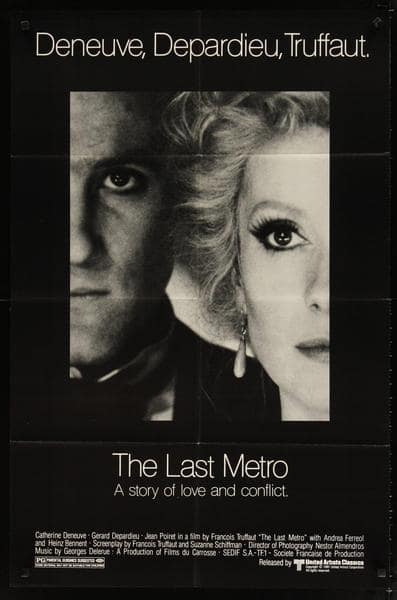
The Last Metro (Le Dernier Métro) is set virtually in its entirety in a crumbling French theatre. During the Nazi occupation, Jewish director Lucas Steiner (Heinz Bennent) hides in the basement of the theatre, while his wife Marion (Catherine Deneuve) stars in its latest production. Marion is enamored of leading man Bernard Granger (Gerard Depardieu), and he with her, but they resist temptation out of respect to her husband. When she is given a choice between loyalty to her husband and to her countrymen, her dilemma offers two logical solutions–both of which are acted out on stage during the play. The Last Metro is one of the few films to accurately capture the feeling of what it was like to live in Paris under the thumb of the Nazis.
Films mentioned
Evil Dead (Sam Raimi, 1981)
Halloween (John Carpenter, 1978)
Child’s Play (Tom Holland, 1988)
A Nightmare On Elm Street (Wes Craven, 1984)
The Thing (John Carpenter, 1982)
The Fly (David Cronenberg, 1988)
Psycho (Gus van Sant, 1998)
The Shining (Stanley Kubrick, 1980)
Candyman (Bernard Rose, 1992)
Space Jam: A New Legacy (Malcolm D. Lee, 2021)
E.T. The Extra-Terrestrial (Steven Spielberg, 1982)
Jurassic Park (Steven Spielberg, 1993)
2001: A Space Odyssey (Stanley Kubrick, 1968)
eXistenZ (David Cronenberg, 1999)
Sleeping Beauty (Clyde Geronimi, 1959)
The Exorcist (William Friedkin, 1973)
Se7en (David Fincher, 1995)
Mank (David Fincher, 2020)
Fallen (Gregory Hoblit, 1998)
Scream (Wes Craven, 1997)
Honogurai Mizu No Soko Kara (Hideo Nakata, 2002)
Pet Sematary (Mary Lambert, 1989)
The Lord Of The Rings: The Fellowship Of The Ring (Peter Jackson, 2001)
The Lost World: Jurassic Park (Steven Spielberg, 1997)
Jurassic Park III (Joe Johnston, 2001)
Star Wars (George Lucas, 1977)
It (Andy Muschietti, 2017)
It (Tommy Lee Wallace, 1990)
Manon Des Sources (Claude Berri, 1986)
Jean De Florette (Claude Berri, 1986)
Blade Runner 2049 (Denis Villeneuve, 2017)
Mad Max: Fury Road (George Miller, 2015)
The Raid 2: Berandal (Gareth Evans, 2014)
Before Sunset (Richard Linklater, 2004)
Before Sunrise (Richard Linklater, 1995)
Terminator 2: Judgment Day (James Cameron, 1991)
Bad Lieutenant: Port Of Call – New Orleans (Werner Herzog, 2009)
Aliens (James Cameron, 1986)
Miami Vice (Michael Mann, 2006)
War Of The Worlds (Steven Spielberg, 2005)
Ghostbusters: Afterlife (Jason Reitman, 2021)
Ghostbusters (Paul Feig, 2016)
Knights Of Cups (Terrence Malick, 2015)
Nostalghia (Andrei Tarkovsky, 1983)
Le Dernier Métro (François Truffaut, 1980)
Our hosts
from left to right: Tom Ooms (film programmer), Hugo Emmerzael (film critic) Kiriko Mechanicus (film maker), Elliot Bloom (podcast producer)
That’s right people, it’s Oscars time! We’ve certainly got that Oscar fever, but more a fever of chaotic distress. Instead of the usual baseless predictions, we try to make sense of the Academy Awards and this American institution that seems to dominate the industry. Our equally chaotic film choice for this episode, The Congress (Ari Folman, 2013), certainly helps us dissect the flaws within the current institution. All the while, Tom tries grappling with the power of lists, and his picks of Oscar Award moments, Kiriko provides a perfect rendition of her favourite acceptance speech, despite her indifference to the whole ceremonial affair, and Hugo remains the tortured film critic divided between love and duty. We also tackle a question from one of our listeners, and discuss the importance of forming our own individual opinions regardless of lists.
It’s all about Nightmares & Nostalgia, as we discuss childhood trauma at the movies, the films that shocked and impacted us as kids. How has nostalgia changed the way we look at films and how does it fuel a never-ending strain of sequels and remakes?
Film Club
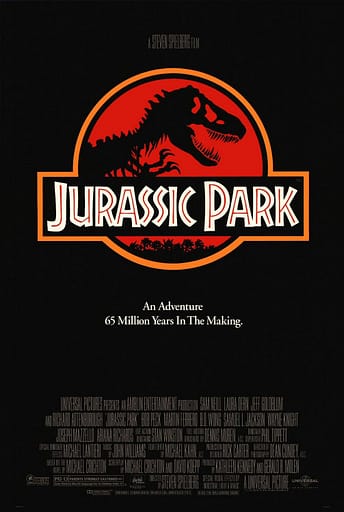
In Steven Spielberg’s massive blockbuster, paleontologists Alan Grant (Sam Neill) and Ellie Sattler (Laura Dern) and mathematician Ian Malcolm (Jeff Goldblum) are among a select group chosen to tour an island theme park populated by dinosaurs created from prehistoric DNA. While the park’s mastermind, billionaire John Hammond (Richard Attenborough), assures everyone that the facility is safe, they find out otherwise when various ferocious predators break free and go on the hunt.
Films mentioned
Star Trek IV: The Voyage Home (Leonard Nimoy, 1986)
Moonlight (Barry Jenkins, 2016)
La La Land (Damien Chazellle, 2016)
Parasite (Bong Joon-ho, 2020)
The Congress (Ari Folman, 2013)
Waltz With Bashir (Ari Folman, 2008)
Driving Miss Daisy (Bruce Beresford, 1989)
Green Book (Peter Farrelly, 2018)
The Pervert’s Guide To Ideology (Sophie Fiennes, 2012)
Wonder Woman (Patty Jenkins, 2017)
Black Panther (Ryan Coogler, 2018)
Monster’s Ball (Marc Forster, 2001)
The Godfather (Francis Ford Coppola, 1973)
Mank (David Fincher, 2020)
Silver Linings Playbook (David O. Russell, 2012)
Shakespeare In Love (John Madden, 1998)
Magnolia (Paul Thomas Anderson, 1999)
The Matrix (Lana Wachowski, Lilly Wachowski, 1999)
The Handmaiden (Park Chan-wook, 2016)
Holy Motors (Leos Carax, 2012)
The Irishman (Martin Scorsese, 2019)
The Truman Show (Peter Weir, 1998)
What Ever Happened To Baby Jane? (Robert Aldrich, 1962)
Joker (Todd Phillips, 2019)
Il Conformista (Bernardo Bertolucci, 1970)
There Will Be Blood (Paul Thomas Anderson, 2007)
Cool Hand Luke (Stuart Rosenberg, 1967)
Grave Of The Fireflies (Isao Takahata, 1988)
My Fair Lady (George Cukor, 1964)
Mean Girls (Mark Waters, 2004)
Der Goldene Handschuh (Fatih Akin, 2019)
The Devil’s Advocate (Taylor Hackford, 1997)
Our hosts
from left to right: Tom Ooms (film programmer), Hugo Emmerzael (film critic) Kiriko Mechanicus (film maker), Elliot Bloom (podcast producer)
We are delighted to welcome Miriam Guttmann, director of the recent VPRO documentary Seeds of Deceit (Het Zaat Van Karbaat), who joins us for a discussion on the ethics of documentary-making. Miriam provides a very candid insight into the large web of complexities she found herself navigating through, during the filming of her Sundance selected film. In this episode we explore the purpose of a documentary maker, a director’s relationship to the characters of the story they’re directing and where their duty lies. We unpack these more abstract questions through the lens of Miriam’s brilliant short docu-series, so make sure to check it out!
Miriam Guttmann (1994) is a Dutch documentary filmmaker based in Amsterdam.
She graduated from the Netherlands Film Academy in 2018 with the short film Seeds of Deceit, which won various international prizes.
The three-part series Seeds of Deceit with the same title, that Miriam made as a sequel to her short film is the first Dutch series ever to be selected for the prestigious Sundance Film Festival where it premiered in January 2021. The series was broadcasted on Dutch television by the VPRO early 2021.
Next episode
We get that Oscar fever and so it’s only right we unpack the Academy Awards – the good the bad and the ugly. We explore their finest and most disappointing moments and how the industry tends to commodify its players.
Film Club
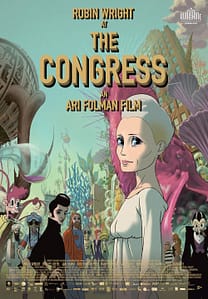
Writer/director Ari Folman adapts prophetic science-fiction author Stanislaw Lem’s novel The Futurological Congress to tell the tale of an actress (Robin Wright) who sells her likeness to a powerful film studio, which in turn transforms her essence into a chemical compound suitable for consumption by the masses. Harvey Keitel, Danny Huston, Jon Hamm, and Paul Giamatti co-star in this ambitious feature that blends live-action with animation to offer a cautionary look at the future of entertainment.
Films mentioned
Seeds Of Deceit (Miriam Guttmann, 2021)
E.T. The Extra-Terrestrial (Steven Spielberg, 1982)
La Dolce Vita (Federico Fellini, 1960)
The Notebook (Nick Cassavetes, 2004)
Sex And The City (Michael Patrick King, 2008)
The Act Of Killing (Joshua Oppenheimer, 2012)
Casting Jon Benet (Kitty Green, 2017)
The Assistant (Kitty Green, 2019)
The Congress (Ari Folman, 2013)
Our hosts
from left to right: Tom Ooms (film programmer), Hugo Emmerzael (film critic) Kiriko Mechanicus (film maker), Elliot Bloom (podcast producer)
After celebrating our love for cinema, we turn to the question of whether cinema is actually all a lie. Do the fictions we consume shape our own realities? Can our lived experiences ever be wholly original and unique? In this episode our three hosts unpack these big questions and discuss why Britney Spears is the modern day Truman, if we are happy living in our own matrix, as well as our most lived cinematic moments.
The Matrix (Lana Wachowski, Lilly Wachowski, 1999)
The Matrix Reloaded (Lana Wachowski, Lilly Wachowski, 2003)
The Seeds Of Deceit (Miriam Guttmann, 2021)
Our hosts
from left to right: Tom Ooms (film programmer), Hugo Emmerzael (film critic) Kiriko Mechanicus (film maker), Elliot Bloom (podcast producer)
To kick off this new podcast series we thought it would only be right to reflect upon the very thing that has brought us together – our love for cinema! Join us and hear from three very different perspectives as they pull back the curtain from the screen and even themselves. We also get to hear from some of you who have shared your own love for the big screen.
The Act Of Killing (Joshua Oppenheimer, Christine Cynn, 2012)
Ladri Di Biciclette (Vittorio De Sica, 1948)
Sorry To Bother You (Boots Riley, 2018)
The Trial (Orson Welles, 1962)
The New World (Terrence Malick, 2005)
Berlin Alexanderplatz (Rainer Werner Fassbinder, 1980)
Dau (Ilya Khrzhanovskiy, 2019)
Random Harvest (Mervyn LeRoy, 1942)
You Don’t Nomi (Jeffrey McHale, 2019)
Showgirls (Paul Verhoeven, 1995)
Sully (Clint Eastwood, 2016)
American Sniper (Clint Eastwood, 2014)
The Shawshank Redemption (Frank Darabont, 1994)
The Thin Red Line (Terrence Malick, 1998)
Dirty Dancing (Emile Ardolino, 1987)
Antichrist (Lars von Trier, 2009)
Mission: Impossible – Fall Out (Christopher McQuarrie, 2018)
Mother! (Darren Aronofsky, 2017)
The Room (Tommy Wiseau, 2003)
The Rocky Horror Picture Show (Jim Sharman, 1975)
Mank (David Fincher, 2020)
Victoria (Sebastian Schipper, 2015)
Salò O Le 120 Giornate Di Sodoma (Pier Paulo Pasolini, 1975)
Beginning (Dea Kulumbegashvili, 2020)
Our hosts
from left to right: Tom Ooms (film programmer), Hugo Emmerzael (film critic) Kiriko Mechanicus (film maker), Elliot Bloom (podcast producer)
We are here to do as we say and celebrate the wonders of the big screen and all that lies behind these infamous flickering images. Everyone’s knowledge of film is unique and individual so join us on our journey to hear from a collection of diverse voices, both in the film industry and those who watch it.
Our hosts
from left to right: Tom Ooms (film programmer), Hugo Emmerzael (film critic) Kiriko Mechanicus (film maker), Elliot Bloom (podcast producer)